The Corner On Character: trustworthiness

Showing posts with label trustworthiness. Show all posts

Because I Said I Would

What an exciting and very busy week this has been. On Monday I took time out for self-care by leading a WellBEing Workshop with the counselors in Pearland ISD just down the road; what a booster shot of restoration and joy that was! 

They were really good sports because I asked them not only to draw a picture on paper plates atop their heads ...  


but also to guess which card they were holding on their foreheads.  


Click the pictures for those ideas we used to help them BE childlike!

We celebrated John's birthday on Tuesday and Joshua will turn 18 tomorrow. How can our baby boy, the third in our trilogy, be voting age? It truly seems like he was just in elementary school with me at Westwood, where he was learning to read and write and make friends and be a kind kid.


And loosely speaking of ABCs, my post on assessing social-emotional learning and growth at Free Spirit Press went live {here} yesterday.

Looking forward, I am headed back into leadership classes and Social Stations this next week. Since class will have a trustworthiness theme, we'll start with writing promise cards to attach to this amazing because I said I would promise banner. I can't wait to find out what our superheroes want to promise. 


Our other Social Stations will include a Trust Fall, a friendship song in the ukulele lab, a friendship clip with reflections, Scramble Square puzzles, Puppet role plays, and Friendship Cootie Catchers. It promises to be great fun.


0

Friendship Is In The Air

How is it possible that January 2017 has already come and gone?
How is your focus on that one little word helping you?
Mine is hope; here's what spoke to me today.
I like the idea of being joyful in hope.


And our nation is going through some turbulent times,
so I connect with being patient in affliction
and faithful in prayer.

Tonight, a quick post, to express my gratitude
for this uplifting visual display.


Here's how this beautiful bouquet came to be:
I saw a variation of this as a door decor at my former school
that really caught my eye and called my name.
Meant as a Valentine's Day display, it read:
Love is in the air ...

Well, I loved it instantly, that's for sure ... so I sent a Facebook message to the mom (Beth) who created it to ask if she'd come make one for us ... not knowing what the answer would be since she doesn't even have students on our campus. 
Obviously, she said yes!
First I thought ours might say kindness is in the air,
it being during the Great Kindness Challenge and all when I first spied it,
but then I remembered that we were heading in to February
and our focus would be shifting to trustworthiness,
our friendship pillar.
So I switched gears and voila.
She decided to tape the letters up there,
so we can switch it to respect or responsibility,
if the spirit moves us.

On the hearts, we put strong verbs that can help students
 make healthy connections in their relationships.

Be.
Care.
Help.
Adapt.
Serve.
Listen.
Accept.
Affirm.
Support.
Respect.
Forgive.
Embrace.
Apologize
Encourage. 
Love.
Trust.
Savor.
Protect.
Comfort.
Share.
Yearn.
Recycle.
Be Kind.
Show compassion.
Practice empathy.
Use self-control.
Be a light.
Play fairly.
Honor.
Take responsibility.
Tell the truth.
Express gratitude.

And so on.

We left a few blank, in case students want to add their reflections.

My heart is soaring because friendship is in the air at Bales Intermediate. And I'm grateful for a volunteer who chose to generously share her time and talent with us.


Happy February.


0

Sunshine In The Storm

As August ends, I hear rumblings; can it be that more rain is headed our way. If you're in the south, then you know it has been a stormy, soggy month. 
We're ready to see more of the sun, that's for sure. 

In leadership classes this week, we've been reading What Do You Do With A Problem? by Kobi Yamada. In this engaging text, the narrator is trying to figure out what to do with the problem that finds and is following him. The illustrations are drawn in such a way that the problem starts out looking like a black cloud and continues to grow to almost-hurricane proportions. As he talks his way through the problem, he realizes that the secret to problems is that they actually hold an opportunity. So I said to my students that it was kind of like finding blessings in your burdens, sunshine in your storm. That's when a new student challenged me with, "What if your problem is so bad that there's no way to find anything good in it? What then?" 

Such a melancholy yet beautiful segue into a discussion about the role of the school counselor, someone to guide you when you're lost, to comfort you when you're sad, to light the path in your darkness, to help you move in right direction. 
Someone to spread cheerfulness.
Someone to remind you that you matter. 
Someone to share joy. 


Someone to listen.
Someone to understand.
Someone to care and hold your heart when you're hurting.

Here now, some pictures of where I get to do what I love:


The stage to the right, for our role plays.
The Puppet Palace in the far back corner.
The Counselor Cafe kidney table in the center.

Behind it, through that opened door, we have a Peace Room ...


filled with lots of different textures to help soothe our senses.


Feelings books, a reflection mirror, warm fuzzies, oh my.

Here's our Crayons to College bulletin board behind the stage


and a close up of our Pillar Power board. 
Team Trustworthiness? I choose YOU.


Just outside of Leadership Central, a 7 Habits of Happy Kids display.

Click the picture to download the lettering from Mel at From The Pond.

I am abundantly blessed to do what I love and love what I do.

Here's to a daily dose of that glorious Vitamin D.


1

Opening Doors

Today I'm excited about a $5 purchase I made at Half Price books.
It's a doorstop for the heavy door at the entrance to Hero Headquarters. 
Perfect, right?


And, if you know me, you know that I see more than just a doorstop. I see an acrostic for four critical aspects of leadership.

S is for service.
               T is for trustworthiness.
                   O is for open-mindedness.
 P is for passion.

Effective leaders start with the heart. They're on the lookout for ways to make things better because they're all about serving others. Effective leaders are also trustworthy. We can count on them because they are honest in their dealings, they keep their promises, and they show integrity by being in the right place at the right time, doing the right thing. Effective leaders have a growth mindset. They're lifelong learners who firmly believe that anything is possible. Anything. And effective leaders live life with great passion. They go to great lengths to enthusiastically and wholeheartedly transfer energy and light to others.

But those are just my thoughts about what STOP might stand for.
I'm so eager to hear what my superheroes at Bales think when I pose the inquiry: What leadership skills will open doors for us?

If you're in the area, please stop by Hero Headquarters; 
we'll keep the door opened for you!


0

Perfectly Imperfect

It's Friday and it just feels like time for a book review.
{Am I the only one who misses PPBF?} 
Yesterday I went to Barnes & Noble to pick up a book I'd ordered, 
and here's the bonus find that made its way home with me. 


(As an aside, I was going to be named James had I been born a boy).

Anyway, this little treasure is packed with valuable gems ready for mining. 
Here's my favorite page, where the problem begins:


The beauty is ... this is so so real.
And, just like in real life, the story morphed.
It wasn't that James said she thinks she's perfect.
It's that James said he thinks her artwork is perfect.
But you know how misunderstandings go ... and now ... 
they're in a fight ... or at least ...  
in our narrator's heart and mind they are. 

Check out a review {here} and {here}.

I see this jewel as the perfect springboard to target and help stop
rumors, gossip, and distrust in their tracks.

The protagonist never does go to the source, to James, to get the truth, which is perfect, because it allows the reader to arrive at that solution by him or herself.

For enrichment, the Telephone Game? What a perfect idea!
Or adapt this lesson and let the glitter represent rumors instead of germs. 
You might want to also treat yourself to this intriguing article:
 Just for fun.

Compare and contrast this book to The Secret Olivia Told Me.


Get yourself a red balloon and inflate it to show how
quickly rumors grow before they eventually explode.

Then ask your children to draw something perfectly imperfect. 
To stretch them.
To nurture their creativity. 
And grow their mindset.

And play this clip to seal the deal (thanks, Lauren!).

Check out this book; I think you'll be perfectly pleased.


2

Experiencing Internship Guest Post

Today I'm excited because my intern is guest posting at the Corner as a part of her homework from me. What a delight it has been to work with this eager newbie and help guide her during the last few months of her school counseling program at the University of Houston-Clear Lake.
Thank you, Krystle, for your willingness to learn, grow, and share.

******************************


My (not so) Teeny Tiny Experience by Krystle Smith

My name is Krystle Smith and I am currently working with Barbara as her intern.  Lucky me ... right?!?  I completely agree; my experience with her has been a blessing and such a wonderful learning experience. I feel more confident when working with the students … I am still working on gaining confidence in using the puppets. I just don't know how she knows what the puppets are going to say … then to give them a voice to match ... a true talent!

Last week, my Professor was coming out to observe me in an individual counseling session … to say I was nervous is an understatement. I was terrified because he is a difficult man to impress. I am happy to say it went really well!  I have some areas to improve upon, which I completely understand and am ready to work on. I struggle with letting go of the teacher side of me and becoming the counselor. Please keep in mind that I am still learning as you read about my lesson. 

My session objective was to target lying, with a focus on exaggeration and little white lies. I wanted my client to understand that telling a little white lie and/or exaggerating is still considered lying. After consulting with Barbara, I used one of her peace-class ideas and changed it to fit my objective. I began the session using a pre-test assessment. I asked my young client, "On a scale of 1 to 4, with 1 being I don't know anything and 4 being I know everything, rate how much do you know about being honest."  My client was so eager and said a 4, indicating that she knew everything possible though she is only in first grade ... that's impressive, friends!  LOL. Then I asked her if she ever heard the saying "Finders keepers, losers weepers" and what it meant to her. She said she had never heard it before, so I briefly explained it. 

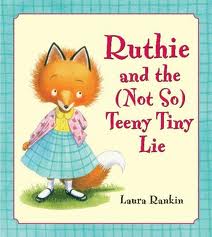
Then, we read the book, Ruthie andthe (not so) Teeny Tiny Lie by Laura Rankin. We started with a picture walk and talking about a fox, how sly and sneaky they can be. During the book, I stopped at many different parts and I told my client she is now playing the part of Ruthie.  For example, we stopped on the page where Ruthie finds a teeny tiny camera and says it is hers now. We discussed if this was a lie or not. She explained it was a lie because it was not her camera. {Enter the fun part} When Ruthie tells a lie, I loosely wrapped yarn around the client. As we continued reading, Ruthie tells more lies. We pause and the client decides if it’s a lie or not, then is tied up with one more layer for every lie. Once the client starts to get wrapped up, I stop and assess. "How does it feel to be wrapped up? Is it easy to move around?" I then explain that when people lie we get wrapped up in our lies and it weighs us down and it makes life more difficult. Then we continue you with the book. Eventually Ruthie begins to tell the truth and apologizes to her friend. As she begins to tell the truth, I begin to unwrap the client and again we talk about how it feels when we tell the truth or admit that we are wrong. 

After the book was finished, I went back to the page where Ruthie apologized to her friend, Martin. Ruthie says. "I am sorry I took your camera." and Martin's response is "It’s okay." To me, this response is almost validating what Ruthie did as no big deal, but really it was a big deal. I asked the client what he could say instead. I was hoping she'd refer to the "I Feel" statements we’d learned earlier this year. When it didn't go this way, I led her to it and she completed the statement, "I felt sad when you took my camera and I need you to not do that again. I forgive you."  This had more meaning to me than just, "it's okay.” Then I wanted to connect this to a real-life situation. Her teacher had just consulted with me earlier in the week about her telling little white lies. I 'made up' a story modeled after something that had happened with her. After telling the story, I asked her if the person who made up some details was actually telling a lie. She said yes and, as I helped her apply it to her own situation, she hesitated but then admitted she’d done that. We agreed that, while it is a little white lie, it is considered lying. Lastly, we talked about exaggerations. I told her that my dog had twenty puppies the other day. She said that's not true because that can't happen. I said you're correct; I exaggerated the truth. My dog did have puppies but only 4. (well not really, my dog is a male...lol) I closed the lesson with asking the same questions from the pre-test. I asked her again to rate her knowledge on honesty, again she told me a 4. When I reminded her that she had just learned a few new things, so did she really think she has it mastered?, she reluctantly brought it down to a 3. You just have to love a confident kid!

I plan to continue the discussion on white lies and help her to connect it to more real life situations. I want her to pretend to be an investigator and to be on a mission to spot people telling the truth at school and at home. I want her then to report back to me about what she has noticed. 


I hope this lesson can be used again with some of your and your students. Feel free to change it to make it work best for you. I feel the best ideas are borrowed from next door, harvested and cultivated with our own little twist added on to them.

Clearly our future looks bright with interns like Krystle graduating, joining our school families, and leading the way.


1

Friends Stick Together

Happy National School Counseling Week!
The Sally in this story - Information, Please - reminds me of my Sally, whom I still miss every day. 
She was the dearest counselor, mentor, and friend.

Today I'm eager to share two things I created this weekend.

1. I found this excite-mint gum at the new Aldi store and just had to figure out how to incorporate it into the week. Here's what I came up with; click the graphic to download a template if you want the sayings. Who knew gum could generate such excite-mint! I plan to put one in each staff member's box on Tuesday.


I went to the store with the trustworthiness pillar - the friendship pillar - on my mind. Friends stick together, so I came home with twenty packs of this gum. 
2. And this song.


I can't wait to try it out. School counselors get to help students work through relationships and find friends that fit every day.

What book or lesson might complement this little ditty in your Corner? Here's Shawna's list of her top ten friendship titles from The Picture Book Teacher's Edition that would work. Some trustworthiness and friendship faves from my shelf 
that I could use it with include:


How will you celebrate with your School Counselor today?


4

Why Knot?

Today I'm excited because we dressed as rockers to celebrate our volunteers who rock!

Such a Motley Crew we are!

Anywho, how many times have your students been stuck on a problem and the solution was pretty much staring at them, just willing them to figure it out? Sometimes we just have to let go and look at it from a different angle, with a different mindset, or from a different point of view, right?


Enter The Knot exercise. This is such a great visual for the need to keep an opened mind, to have a growth mindset, to allow yourself go after something from a different angle, to think outside of 
that proverbial box.

Give each student a 12" piece of rope, yarn, or string. Instruct them to hold one end in each hand and, without letting go, tie a knot. They'll try for awhile, but it's knot going to work! Process that with them. What do they do with seemingly impossible tasks, problems without clear solutions, like that one? Whom do they go to for help? How do they choose those people? This might just lead you into a "someone you trust" lesson, too!

Now lay that same piece of string down and cross your arms. With arms crossed, use your hands (one for each end) to pick up the rope. Uncross your arms and watch that knot magically appear.

Here's a quick tutorial to show you how it's done ...
why knot try it?


What other things could you use the knot to illustrate?


3

You've Got A Friend


It's the beginning of another month and you know what that means? Yep, I'm joining author Maria Dismondy's Make A Difference Monthly and posting about the trait of trustworthiness! Click the graphic above to link up.


Trustworthiness is an essential ingredient in a friendship and it's hard to study one without the other. Ask your students what they're looking for in a friend and what qualities they bring to their friendships and they'll likely be describing the trait of trustworthiness: someone who is loyal, reliable, and honest, who keeps their promises, has integrity, has the courage to do the right thing, and has a good reputation.


Click here for more info.
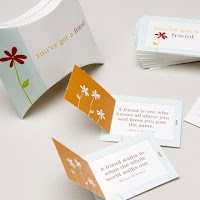
Do you know about these window cards from Compendium, Inc.? It's so much fun to open them up and see the secret message inside. Use them as writing prompts or morning meeting starters. Find out what students think the person who said those words meant. Or simply use them as positive reinforcers for when you see someone showing a kindness to a friend. 


You can even get crafty and make your own. Research friendship quotes or have students write something themselves about being friends. Give each student two index cards, one for their words of wisdom about friendship and the other for the heart that they'll cut to cover up their words. 
They'll each need two small stickers as well. 
(I used pet stickers since dogs are a man's best friend!)
Here's what our finished product looks like: 


Of course, students could splash some color onto their homemade window cards for an added personal touch. Let them make one to keep and one to share with a friend.


2

The Lunch Thief

Click the graphic for the author's website
Yesterday's post about those precious preschool pals who helped tackle the issue of hunger inspired today's Picture Perfect Book Friday pick:

Title: The Lunch Thief
Author: Anne C. Bromley
Illustrator:  Robert Casilla
Publisher: Tilbury House
Date of Publication:  July 1, 2010
Fiction
Suitable For: Ages 7-12


Themes/Topics: hunger, homelessness/temporary displacement, trustworthiness, empathy, friendship


Opening Sentences: I’m so hungry I could eat the crumbs the seagulls left behind.  They fly in from the coast every day to clean up the schoolyard after lunch.

Brief Synopsis:  Why is Rafael is so hungry? The new kid, Kevin, is stealing his lunch, that’s why. Rafael's not really sure what to do. When he sees that other kids’ lunches are disappearing, too, and then realizes that Kevin is from a nearby town that was ravaged by wildfires, Rafael has a new appreciation for Kevin's plight.  So what does he do?  He finds a way to connect with the hungry boy, subtly helps stop the stealing, and mixes in the fixins for friendship in the process.
 
Reviews and resources:  Tilbury Publishing’s Teachers Take Note, Books That Heal Kids, and Writing On The Sidewalk.  

Why I Like This Book:  This gourmet gem serves up the perfect recipe for a lesson on trustworthiness and empathy. Start with the question:  Is stealing always wrong? Then read the book and ask things like this:  Does Kevin want to be a lunch thief? What might you do if you were Kevin? Have you ever been in a similar situation? What does Kevin have to do to make things right? Why did Kevin offer Rafael a quarter for his lunch in the end? Will Rafael take the quarter? Why or why not? What consequences, if any, would you give Kevin? 

Use this story as a chance to learn more about hunger and/or homelessness in your area. Help your students brainstorm ways to help combat the issue, then find a homeless shelter nearby and take a field trip to serve a meal. Encourage students to write down the ways they could earn money so that they can make a donation. Integrate math skills by calculating how much money they’d need per meal to help one person for a week, a month, a year. Or hold a food drive. Weigh, sort and/or chart the items for curricular integration, then invite a speaker from the local pantry to come and talk to the students about the facility, the charitable work they do, and the service they provide.

Does your school have a Buddy Backpack program?  If not, consider starting one. We partner with the Houston Food Bank and Friendswood United Methodist Church to provide a weekly sack of non-perishable food and snack items to students who might otherwise go hungry over the weekend. 

For today's Picture Perfect picks, go to Susanna Leonard Hill's blog {here}.  For an extensive list of Picture Perfect Books, click the graphic below.  


14

Finders Keepers, Losers Weepers?

What's your favorite read-aloud? Ruthie and the (Not So) Teeny Tiny Lie by Laura Rankin is one of my all-time faves to bring to life.  


Click image for Shawna's book review and ideas!


Start the discussion by looking at Ruthie on the front cover. What's she doing? And how is she feeling about it? Ask your students if sneaking or hiding things is ever a good idea. Find out if they know what little white lies are. Is there a difference between a little white lie and a real lie?  


In this clever tale, an adorable young fox named Ruthie, who LOVES teeny, tiny things, finds a cute camera on the playground and claims that it is hers. After all, finders keepers, losers weepers, right? When she's confronted by Martin, who says he got that camera for his birthday, Ruthie lies so that she can keep the little treasure. But when Ruthie's lie catches up with her, will she do the right thing and tell the truth? 


Ruthie imagines a lot of different consequences for her actions. Ask students if they think the teacher should have punished Ruthie for taking the camera? How about for lying about it?  Find out from students why the bus ride home was SO long in the middle of the book but not that long in the end. Ruthie didn't move, so what made the difference?


After a riveting discussion about the roles of Ruthie and Martin, the teacher and Ruthie's parents, reinforce the lesson by having your students recite this little poem: If you mess up, you gotta fess up. To add some fun, try saying it in Ruthie's teeny tiny voice, and then in the voices of the other characters in the book. Then try a grandma or grandpa voice, a squeaky mouse voice, a dog or cat voice.


For some meaningful movement, play the theme song to the Pink Panther and have kids practice sleuthing around to teach them to be Truth Sleuths! To visually enhance the ripple effect that lies can have and enrich this read-aloud even further, get a bucket of water and some coins to try the Tom Jackson activity-adaptation Water You Covering Up? Want more follow-up fun? Make Character Cameras and send your little photographers out into your school to capture snapshots of students making good choices


Click image to go link up with Mrs. Nelson!


Now, go visit Mrs. Nelson and enter her fabulous giveaway, then s.c.a.m.p.e.r. over to The Teachers' Lounge to check out my guest post called Questioning Creativity.  
Happy Tuesday.

7

The Empty Truth


The Empty Pot by Demi, a Chinese folktale, is one of my go-to faves to illustrate and illuminate the importance of integrity. In this book, the wise emperor is growing old and must choose a replacement for his crown. The flower-loving ruler announces that each child will be given a seed to see who can grow the most beautiful flower. The most successful gardener in this challenge will be made his successor.

Ping, known for green thumb, is certain he can grow a great flower for the emperor, but despite his attentive care, Ping's seed will not grow. He tries a bigger pot and different soil, but to no avail. When the day finally arrives and the emperor orders all of the children to bring their flowers to be inspected, Ping is saddened and ashamed to see so many children with their beautiful flowers. He has nothing to show but his empty pot. (The last time I read this, many of the listeners said something along these lines . . . why doesn't he just go to WalMart and BUY some flowers? . . . talk about foreshadowing!)  His father tells him that he tried his best, and his best is good enough. 

The emperor looks with disappointment at the beautiful flowers before him. At last he approaches Ping and asks why his pot is empty. Ping explains that he did his best to grow the flower but it just would not grow. Then the emperor smiles and exclaims that he has found his replacement. Who? And why?

This book is not one that you want to read straight through. Stop at different spots in the narrative to ask comprehension and cognition questions like:

1. What did Ping think about the contest to grow the most beautiful flower at the beginning of the story?
2. Has Ping tried his best to help the seed to grow? How can you tell? 
3. Does Ping ever give up and stop trying? How do you know?
4. Why doesn't Ping just go out and buy a fully-grown, beautiful bouquet of flowers?
5. Do you think Ping's father gave him good advice? Why or why  not? What's the difference between doing your best and being the best?
6. Why do you think the emperor seems unhappy with all the beautiful plants?
7. What had the emperor done? Why? Do you think his "tricky" challenge seemed dishonest?
8. Whom do you think is the best choice for emperor? Why?
9. What is integrity?
10. What do we mean when we say Ping showed integrity?

For enrichment and follow-up, try these ideas:

1. Ask students to make posters illustrating moments when Ping showed integrity. For extension, have them also draw the ways in which he showed great responsibility in problem-solving. 
2. Challenge students to create a class "integrity" pledge. 
3. Help students to create a bibliography of books that remind them to act with integrity.
4. Have students author their own storybook about a time it was difficult to be honest or show integrity.
5. Ask students to evaluate the importance of sharing a story like The Empty Pot with other children their age. Would they recommend that other teachers (or parents) read this story to elementary-aged students? What about to older students? Let them explain their reasoning in a persuasive paragraph.
6. Ask students to journal the answer to the following prompts: Why might it be important that your friend have integrity? How would you know if a friend has integrity? Would you be able to be friends with someone who doesn't show integrity?
7. If you've got a community partner who might donate some seeds, send a packet home for students to plant as a reinforcement for the lesson.

8.  Use the story as a springboard to your Science unit on plant growth. Why would a cooked seed not grow? Let students experiment and see for themselves, then have them chart or map their observations.


8